

7 October 2026
ASKED
The countdown is on: Just one year to go until the EU's transition to T+1
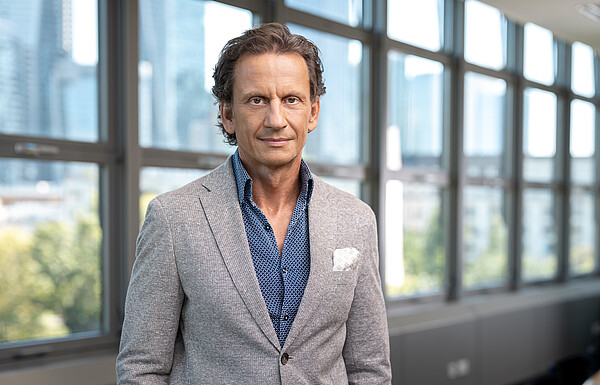
Interview with Thomas Richter, CEO of the German Investment Funds Association BVI
On 11 October 2027, the settlement cycle for securities transactions in Europe will be shortened from T+2 to T+1. For the fund industry, this represents the biggest operational change in years. Thomas Richter explains why the reform is far more than a technical project, the opportunities it creates, and what matters most right now.
Mr Richter, the EU will switch to T+1 exactly one year from now. Why is this topic attracting so much attention across the industry?
Because the transition affects every market participant. In future, a securities transaction will have to be fully settled just one business day after execution. Today, market participants have two days. That may sound like a minor adjustment, but it significantly shortens many processes along the entire value chain. For the fund industry, this is one of the largest projects of recent years. Asset managers, custodians, brokers, trading venues, central securities depositories and other service providers all need to adapt their processes accordingly. Preparations are already in full swing.
Is T+1 merely a technical issue for specialists?
No. While the immediate focus is on trading and settlement processes, the reform raises a much broader strategic question: how competitive are Europe's capital markets? The United States, Canada and several other markets have already adopted T+1. The EU now needs to follow suit. That is why the reform is far more than an IT project. It is an important step in preparing the EU capital market for the future.
What does the reform mean in practical terms for funds?
A distinction must be made here: the T+1 requirement does not apply to fund units or shares. As a result, different settlement cycles for funds will continue to be possible. Nevertheless, fund management companies are directly affected. Funds invest in equities, bonds and other securities that will in future settle on a T+1 basis. Consequently, fund managers must also adapt their processes and IT infrastructure across the entire trading and settlement value chain.
Will T+1 create additional pressure to digitalise?
Absolutely. The shorter the timelines, the less room there is for manual processes, individual coordination and non-harmonised workflows. T+1 compels firms to digitalise processes, improve data quality and increase automation. In the long run, however, these investments will pay off. Europe needs more efficient and more capable capital markets, and T+1 can be an important catalyst for achieving that goal.
Is T+1 the end of the story? Or will this trend continue?
The trend will continue. Capital markets have been moving for years towards greater digitalisation, automation and faster processing. T+1 is therefore not the end point but another important milestone. We can already see this today: new technologies, tokenised securities and fund units, and digital market infrastructures are creating opportunities to process transactions even more efficiently. In the long term, therefore, there will also be discussions about T+0.
Questions by Christiane Lang, Internet Editorial Team.